
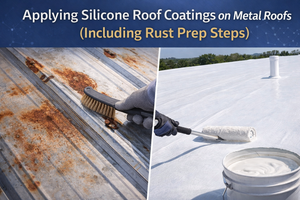
How to Properly Apply Silicone Roof Coatings on a Metal Roof (Including Rust Prep Steps)
Posted by Hector De Leon on Mar 2nd 2026
Metal roofs are durable, long-lasting, and ideal candidates for restoration with silicone roof coatings. However, proper surface preparation—especially when surface rust is present—is critical for long-term adhesion and performance.
In this guide, we’ll walk you through:
• When silicone is the right choice for metal roofs
• How to properly prep a metal roof
• How to treat surface rust before coating
• Step-by-step silicone application instructions
If done correctly, a silicone restoration system can extend the life of a metal roof by 10–20+ years while improving waterproofing and UV protection.
Why Use Silicone Roof Coatings on Metal Roofs?
Silicone roof coatings are ideal for metal roofs because they:
• Resist ponding water
• Provide excellent UV protection
• Create a seamless waterproof membrane
• Expand and contract with metal panels
• Reduce fastener and seam leaks
• Lower roof surface temperatures
Unlike acrylic coatings, 100% silicone does not soften under standing water and maintains flexibility over time.
Step 1: Inspect the Metal Roof
Before any prep work begins, inspect the roof for:
• Loose or missing fasteners
• Open seams
• Failed penetrations
• Oil residue or grease
• Surface rust vs. structural corrosion
If metal panels are severely deteriorated or structurally compromised, those sections must be replaced before coating.
Step 2: Clean the Surface Properly
Silicone coatings require a clean, dry, and contaminant-free surface.
Cleaning Process:
1. Remove loose debris (blow off or sweep)
2. Pressure wash (2,500–3,500 PSI recommended)
3. Use a roof cleaner/degreaser for oily areas
4. Rinse thoroughly
5. Allow roof to fully dry
⚠️ Silicone will not adhere properly to dirt, oil, or chalky oxidation.
Step 3: Treat Surface Rust Properly
Surface rust is common on aging metal roofs. It must be addressed before applying silicone.
If Rust Is Light (Surface Rust Only)
1. Mechanically remove rust using:
• Wire brush
• Grinder with wire wheel
• Power tool with abrasive disc
2. Remove all loose oxidation
3. Clean dust from the area
The goal is to remove loose rust and create a stable surface.
If Rust Is Moderate
After mechanical removal:
1. Apply a rust-inhibiting metal primer
2. Allow proper cure time per manufacturer instructions
3. Spot-check adhesion before proceeding
Silicone coatings should not be applied directly over active rust without proper prep.
If Rust Is Severe
If metal is flaking, pitted through, or structurally compromised:
• Replace panels
• Reinforce with metal patches
• Seal seams with flashing-grade sealant
Silicone is a restoration system—not a structural repair.
Step 4: Seal Seams, Fasteners & Penetrations
Metal roofs commonly fail at:
• Fasteners
• Horizontal seams
• Vertical laps
• Skylights and penetrations
Before field coating:
1. Tighten or replace loose fasteners
2. Apply silicone mastic or flashing-grade sealant over seams
3. Reinforce critical seams with polyester fabric if needed
4. Allow detailing to cure
This step prevents future leaks and improves system longevity.
Step 5: Apply Silicone Roof Coating
Once prep is complete and the roof is clean and dry, silicone application can begin.
Application Methods
• Airless sprayer (recommended for large roofs)
• Roller (3/4” nap recommended)
• Brush (for detail work)
Coverage & Thickness
Typical silicone application:
• 5 gallons per 250 sq ft
• Target 20–22 mils dry film thickness
• Apply evenly to avoid thin spots
Always follow manufacturer specifications for coverage rates.
Weather Conditions
Ideal application conditions:
• No rain in forecast
• Surface completely dry
• Temperatures above 40°F (check product specs)
Step 6: Final Inspection
After curing:
• Check for pinholes
• Confirm full coverage
• Inspect seams and penetrations
• Verify uniform thickness
A properly applied silicone system should create a seamless, bright, waterproof membrane.
Common Mistakes to Avoid
❌ Coating over loose rust
❌ Skipping primer when needed
❌ Applying over wet surfaces
❌ Not addressing fasteners and seams
❌ Applying too thin
Proper prep determines 80% of coating performance.
How Long Will a Silicone-Coated Metal Roof Last?
With proper prep and correct film thickness, silicone roof coatings on metal roofs can last:
• 10–20+ years
• Longer with maintenance and recoat cycles
Periodic inspections help extend lifespan even further.
Final Thoughts
Silicone roof coatings are one of the best restoration options for metal roofing systems—but only when applied over a properly prepared surface.
If surface rust is addressed correctly, seams are reinforced, and proper thickness is applied, silicone can transform an aging metal roof into a long-lasting, waterproof system.
For high-performance silicone roof coatings and metal roof prep materials, visit eCoatingStore.com.